ISRO clears cryogenic engine for next navigation satellite launch
The 200-second test matched predictions, the space agency said.
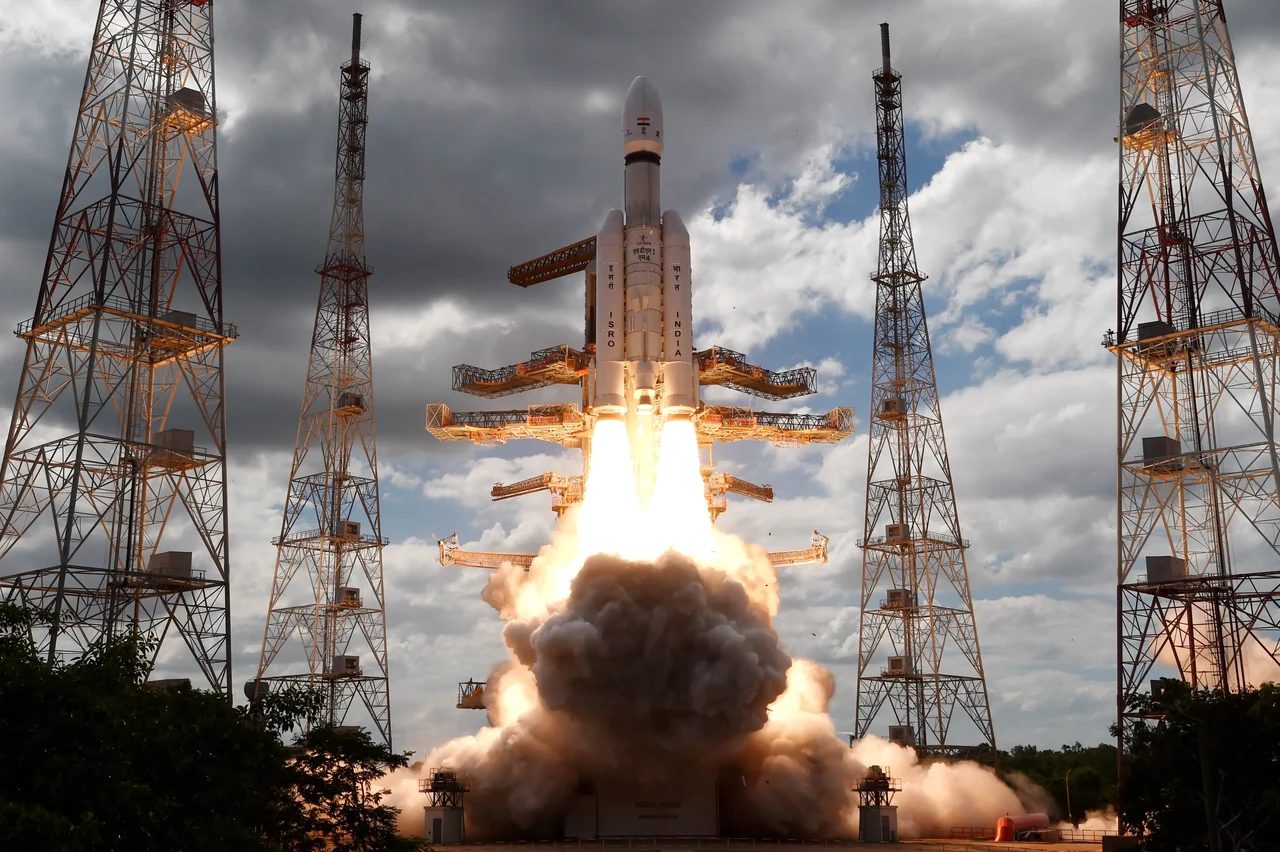

ISRO has completed a flight acceptance test of the cryogenic engine for its next GSLV mission. The test was held on 5 November at the ISRO Propulsion Complex in Mahendragiri, Tamil Nadu. ISRO published the result on 10 November.
The engine ran for 200 seconds and its performance was consistent with predictions made before the test, ISRO said. The main engine and the gas generator both ignited as expected. ISRO described the performance as “satisfactory and consistent with the pre-test predictions”.
A cryogenic engine burns propellants that are stored at extremely low temperatures. On the GSLV it powers the third stage, the news agency UNI reported. A flight acceptance test is a ground firing of the actual engine that will go on the rocket.
The 200-second duration is not new. ISRO ran an acceptance test of the same planned length at Mahendragiri on 27 August 2018, for the engine of the GSLV-F11 flight. Its note on that test said the engine would next be joined with propellant tanks, structures and fluid lines to form the complete cryogenic stage.
The same step now follows. The engine will be installed in the cryogenic stage of GSLV-F19, which will carry the NVS-04 navigation satellite. ISRO’s release did not give a launch date.
The previous satellite in the series, NVS-03, was launched on 30 October. It lifted off at 11:51 pm from the second launch pad at Sriharikota on GSLV-F18, the 20th flight of the GSLV. The satellite weighs 2,232 kg, India Sentinels reported.
The NVS satellites are the second generation of India’s own navigation system, known as NavIC. ISRO says they are meant to continue the services of the older IRNSS satellites. The system covers India and a region extending 1,500 km beyond its borders. It offers a standard service for civilian users and an encrypted service for authorised users, according to the news agency IANS. ISRO plans five second-generation satellites, IANS and India Sentinels reported.
The series has had one setback. NVS-01 was launched on 29 May 2023. NVS-02 was launched on 29 January 2025 but did not reach its intended orbit. In September, before the NVS-03 launch, The Week reported that only three NavIC satellites were working and that NVS-03 would take the count back to four. “Only three NavIC satellites remain in working order, and the system needs a minimum of four to function on its own,” the space and defence analyst Girish Linganna told the magazine.
Minister of State for Space Jitendra Singh told the Lok Sabha in July that NVS-04 and NVS-05 were in advanced stages of development, The Week reported.
What is not known is when GSLV-F19 will fly. ISRO’s release also does not name the engine model or say when the stage will be ready.
Get the day's best stories on WhatsApp. Free, a few a day, no spam.
Follow on WhatsAppSource ledger · स्रोत खाता
Each fact in this story, where it came from, and how it was checked.
| Fact | Source | Check |
|---|---|---|
| Flight acceptance test on 5 Nov at Mahendragiri; 200 seconds | ISRO | Confirmed, official source |
| Engine is for GSLV-F19 carrying NVS-04 | ISRO | Confirmed, official source |
| NVS-03 launched on 30 Oct 2026 | Siasat, India Sentinels | Confirmed, independent outlets |
| Mahendragiri complex is in Tamil Nadu; ISRO published the test update on 10 Nov 2026 | ISRO; UNI | Confirmed, official source |
| Main engine and gas generator ignited as expected; performance “satisfactory and consistent with the pre-test predictions” | ISRO | Confirmed, official source |
| Cryogenic engine is for the GSLV’s third stage | UNI | Single source |
| ISRO ran a planned 200-second acceptance hot test of the GSLV-F11 cryogenic engine at Mahendragiri on 27 Aug 2018; engine then integrated with tanks, structures and fluid lines into the flight stage | ISRO | Confirmed, official source |
| Engine will be installed in the cryogenic stage for GSLV-F19 | ISRO | Confirmed, official source |
| NVS-03 lifted off at 11:51 pm from the second launch pad at Sriharikota; GSLV-F18 was the 20th GSLV flight | ISRO; IANS (Siasat); India Sentinels | Confirmed, official source |
| NVS-03 weighs 2,232 kg | India Sentinels | Single source |
| NVS series is next-generation system for continuity of IRNSS services; coverage of India and 1,500 km beyond | ISRO | Confirmed, official source |
| NavIC has a civilian standard service and an encrypted restricted service; five second-generation satellites planned | IANS (Siasat), India Sentinels | Confirmed, independent outlets |
| NVS-01 launched 29 May 2023 | IANS (Siasat), India Sentinels | Confirmed, independent outlets |
| NVS-02 launched 29 Jan 2025 but did not reach intended orbit | India Sentinels, The Week | Confirmed, independent outlets |
| In Sept 2026 only three NavIC satellites were working; NVS-03 to restore four; Linganna quote | The Week | Single source |
| Jitendra Singh told Lok Sabha in July that NVS-04 and NVS-05 are in advanced stages of development | The Week | Single source |
| ISRO release does not name the engine model | ISRO | Confirmed, official source |
Corrections to this story: none.