Why Europe just slapped a 9.5% duty on Indian steel
Imagine a big sweet maker from another city opens a counter in your neighbourhood and sells kaju katli for less than it charges back home. Your local halwai cannot match the price and starts losing customers. Is that fair competition, or a trick to push him out?
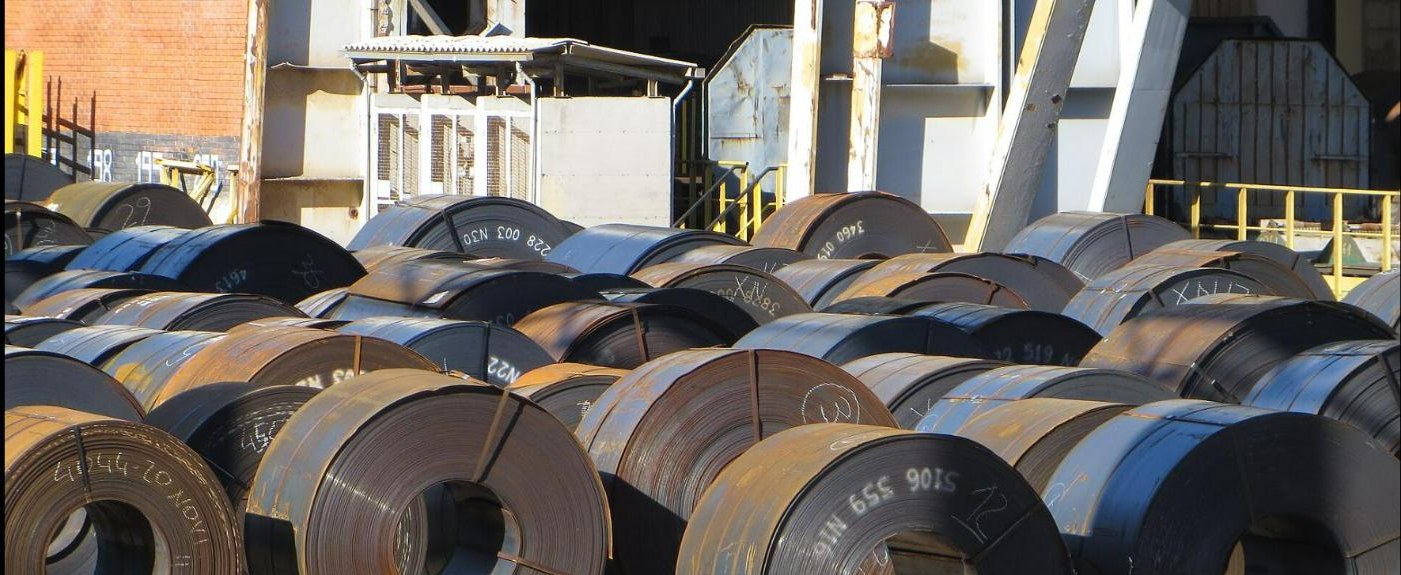
Countries face the same question with imports, and they have a tool for it: anti-dumping duty. Since Tuesday, 17 November, the European Union has charged a 9.5% anti-dumping duty on certain cold-rolled steel from India, including from JSW Steel and Tata Steel. Here is how such a duty works.
What counts as dumping
Dumping is when a company exports a product at a price lower than its "normal value". Normal value is usually what the product sells for in the exporter's home market, or, if that is not a fair guide, its cost of production plus a reasonable profit.
Selling cheap is not a crime by itself. Under World Trade Organization rules, an importing country can hit back only if it shows three things: the goods are being dumped, its own industry is suffering "material injury", and the dumping is causing that injury. The EU adds a fourth test: the duty must not go against the wider European interest.
How a case unfolds
It usually starts with a complaint from local producers. In this case, the European steel association, EUROFER, complained, and the European Commission opened an investigation on 18 September 2025 into cold-rolled flat steel from India, Japan, Taiwan, Türkiye and Vietnam.
Investigators send questionnaires to exporters and importers, study prices and costs over a fixed window (here, July 2024 to June 2025), and work out a "dumping margin": how far the export price falls below normal value. They then judge the damage to local industry.
Often a temporary, or provisional, duty comes first, within seven to eight months in the EU. Here the Commission skipped that step and went straight to a definitive duty. The final regulation was adopted on 13 November, published on 16 November and took effect the next day. EU investigations must finish within 14 months, and this one took almost exactly that.
Definitive duties normally last five years. They then lapse unless a review finds that dumping and injury would return without them, in which case they can be extended for another five years.
The EU's steel decision
India got a single rate of 9.5% for all covered exporters. The others were hit harder: 27.9% for Japan, 20.7% to 27% for Taiwan, 16% for Vietnam, and 3% to 7.8% for Türkiye. Imports of these products from India were worth about €282 million, in an EU market estimated at roughly €23.2 billion.
The Commission also found what it called a "particular market situation" in India, saying government measures had affected domestic iron ore prices. So it built its own benchmark for Indian costs rather than relying fully on local prices. The products covered are uncoated cold-rolled steel; stainless steel and some electrical steels are left out.
Who decides in India
India runs its own cases the same way, but with two players. The Directorate General of Trade Remedies (DGTR), under the commerce ministry, investigates and recommends. The finance ministry then decides whether to impose the duty, normally within three months of DGTR's final findings, and customs notifies it.
The duty can be no more than the dumping margin, and DGTR usually recommends the lower of the dumping margin and the "injury margin". A provisional duty can last up to six months, extendable to nine. A final duty runs for five years unless revoked, and can be extended after a "sunset review".
The finance ministry does not always say yes. A law firm's analysis found that between March and June 2026, only 3 investigations ended in duties while 13 positive DGTR findings were not acted on.
So what does it mean for you?
For Indian exporters, the EU duty makes their steel 9.5% dearer at Europe's border. They may have to cut prices, accept thinner margins or sell elsewhere. How much it hurts depends on how much of each company's business is this product; other Indian steelmakers sell very little of it to the EU.
Flip the picture when India is the one imposing duties, often on chemicals, glass or plastics from China. Indian factories making those goods get breathing room, which is the whole point. But Indian companies that buy them as raw material pay more, and some of that can trickle down to shoppers. That trade-off between producers and users is exactly what the finance ministry has to weigh.
Did you know? Tata Steel also makes steel in the Netherlands and the UK, so the same EU duty that taxes its Indian exports could help its European plants.
- Regulation (EU) 2026/2547 adopted 13 Nov 2026, published 16 Nov, in force day after publication; India 9.5% for JSW Steel, JSW Steel Coated Products, Tata Steel and all others; product scope: EUR-Lex (Official Journal of the EU), 16 Nov 2026
- Definition of dumping and normal value; four conditions incl. Union interest; complaint by producers; 14-month limit, provisional in 7-8 months; measures generally five years, extendable after expiry review: European Commission, DG Trade
- WTO definition of dumping; dumping, material injury and causal link required; duties normally end within five years: World Trade Organization
- Effective 17 Nov 2026; rates Japan 27.9%, Taiwan 20.7-27%, Türkiye 3-7.8%, Vietnam 16%; India imports €282 million; EU market €23.2 billion; 'particular market situation' and iron ore; stainless and some electrical steels excluded; EUROFER complaint: Maritime Gateway, 17 Nov 2026
- Impact on JSW and Tata Steel; Tata Steel Europe (Netherlands, UK) could benefit; other Indian steelmakers' EU exports of the product negligible: Upstox, 17 Nov 2026
- Investigation opened 18 Sept 2025 after EUROFER complaint; investigation period 1 Jul 2024 to 30 Jun 2025; no provisional duties: SteelOrbis, 6 Aug 2026
- DGTR investigates and recommends; finance ministry imposes within three months of final findings (Rule 18); March-June 2026: 3 duties vs 13 affirmative findings not imposed: Lakshmikumaran & Sridharan, 19 Aug 2026
- Duty capped at dumping margin, lesser of dumping or injury margin; provisional duty up to 6 months extendable to 9; five-year validity; sunset review: Bhatt & Joshi Associates
- Section 9A(5): duty ceases after five years unless revoked earlier; may be extended after sunset review: Lakshmikumaran & Sridharan
- CBIC notifies duties recommended by DGTR; finance ministry takes final decision; five-year levy on Chinese products: India Sea Trade News
Spotted a mistake or have an idea for a read? Write to [email protected].
