Who decides the rupee's dollar rate? A simple guide
Walk into any sabzi mandi at dawn and watch the tomato price. Nobody announces it from a loudspeaker. It settles somewhere between what the farmers want and what the shopkeepers will pay, and it changes from one morning to the next. The rupee's price against the dollar works in much the same way.
This week it moved in a direction many people had stopped expecting. On Tuesday, 17 November, the rupee closed at 93.51 to the dollar, its strongest level in seven months. On Wednesday it inched up again to end at 93.44 (provisional). Back on 20 May, it had touched an all-time low of 96.90. So who decides the number, and why does it keep moving?
Nobody sets it, and everybody does
Since March 1993, India has let the rupee's value be decided by the market. Before that, the rate was largely managed by the authorities. Now the price comes from banks buying and selling dollars with each other all day, on behalf of their customers.
Think of two queues at a currency counter. In the first are people who need dollars: oil companies paying for crude, firms importing electronics, families paying fees for a child studying abroad, and foreign investors pulling money out of India. In the second are people who have dollars to sell: software and textile exporters, Indians abroad sending money home, and foreign investors bringing money in.
When the first queue is longer, the dollar gets dearer and the rupee weakens. When the second queue grows, the rupee gains. That is really the whole engine. Everything else is about what makes each queue longer or shorter.
What pushed it down, and what lifted it
Oil is the biggest weight on the first queue. India imports close to 90% of its crude, mostly paid for in dollars. In May, Brent crude was near $110 a barrel amid the Iran conflict and shipping disruptions in the Strait of Hormuz, so importers needed far more dollars. At the same time, foreign portfolio investors had sold more than $22 billion of Indian assets since late February. That was the backdrop to the record low.
This week the queues shifted the other way. Dealers credited the 17 November rise to softer crude, at around $92.8 a barrel, firmer Indian share markets and fresh buying by foreign investors. The gains stayed small because the US dollar was strong worldwide and US bond yields were high, which makes parking money in America more tempting.
Where the RBI comes in
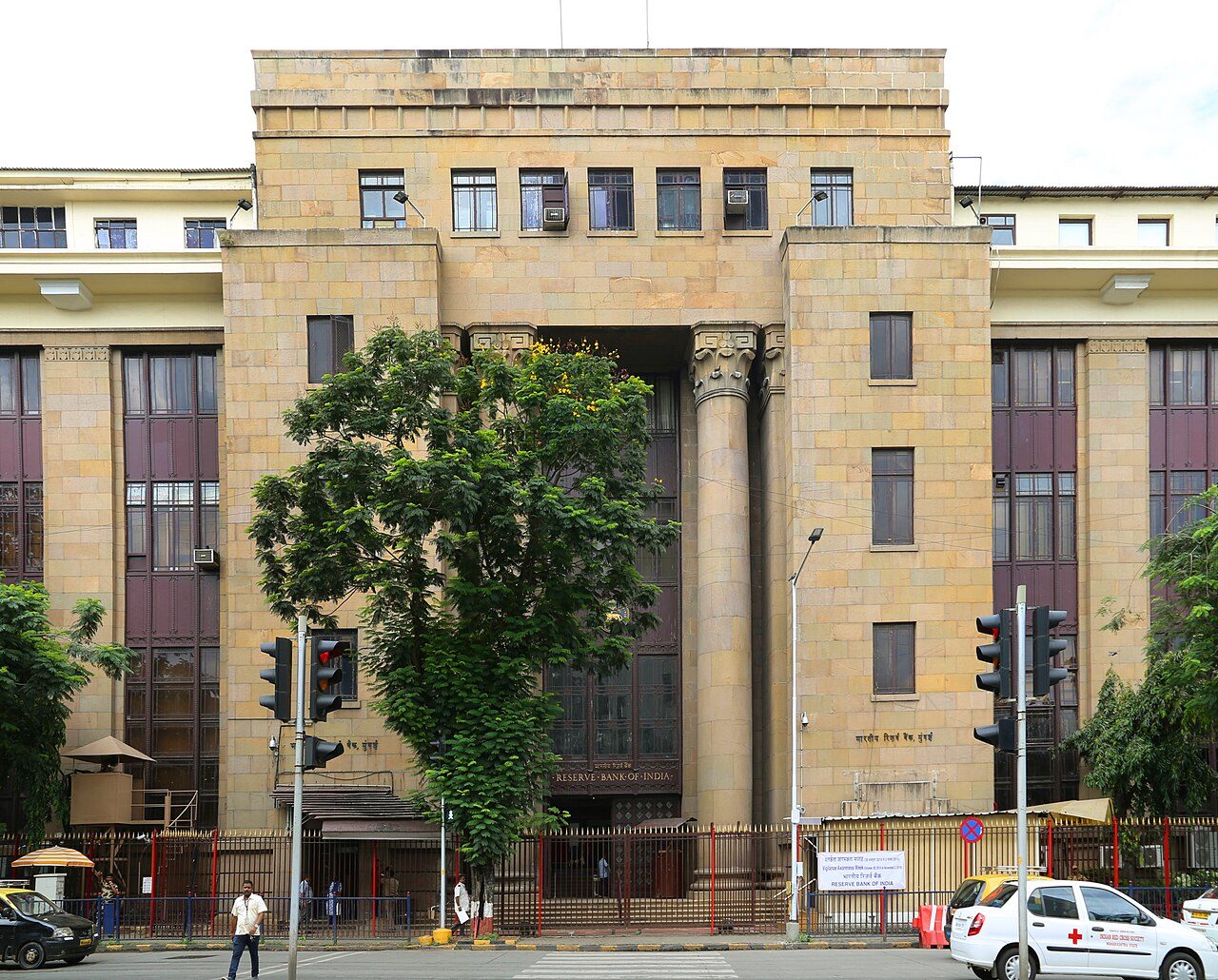
If the market sets the price, what is the Reserve Bank of India doing? Its job is closer to that of a traffic policeman than a shopkeeper. RBI Governor Sanjay Malhotra said in April that intervention is aimed at "smoothing excessive and disruptive volatility", without targeting any specific level or band for the rupee.
In practice, when the rupee is falling too fast, the RBI sells dollars from its reserves, often through state-run banks. That adds to the second queue and slows the slide. During the May sell-off, bankers estimated its daily sales at between $800 million and $2 billion. It slowed the fall but did not reverse it. When the rupee rises sharply, the RBI can do the opposite and buy dollars, which also tops up its reserves.
Those reserves are the RBI's water tank for dry days. For the week ended 6 November, India's foreign exchange reserves stood at about $719.55 billion, including roughly $104.8 billion in gold. A full tank does not stop the dry season, but it means the tap does not run dry in a panic.
The "official" rate in your newspaper
You will often see a single reference rate quoted for the day. Since 10 July 2018, this has been worked out by Financial Benchmarks India Pvt Ltd (FBIL), which took the job over from the RBI. It is based on quotes collected from selected banks in a short, randomly chosen time window around midday, a method set while the RBI still ran it.
This reference rate is used to settle exchange-traded currency futures and options, for some government foreign-exchange deals and to revalue the RBI's own foreign assets. It can differ a little from the rate trading at any given moment, though the direction of movement is the same. The rate you get at a bank counter or on a forex card will be different again, because the seller adds its own charges.
Is a weaker rupee always bad news?
Not for everyone. An exporter who earns in dollars gets more rupees for each sale, and a family in Kerala receiving money from a son in Dubai sees a bigger amount land in the account. The losers are those who pay in dollars: importers, students abroad and, through fuel prices, all of us.
There is also the question of what the "right" level is. In October, Governor Malhotra said that by a number of estimates, including the real effective exchange rate (REER), the rupee is not overvalued and may even be undervalued. REER compares the rupee with a basket of trading partners' currencies, adjusted for differences in inflation, so it gives a wider view than the dollar rate alone.
So what?
The dollar rate is not a scorecard of the country's pride. It is a price, set by millions of everyday deals, that quietly reaches your petrol pump, your phone's price tag and your child's foreign university fees. When you read that the rupee "fell" or "rose", ask the mandi question: which queue got longer today, and why?
Did you know? The FBIL reference rate is used even by the International Monetary Fund, when it revalues Special Drawing Rights (SDRs), its own reserve asset.
- Rupee closed at 93.51 on 17 Nov, a seven-month high; drivers softer crude (Brent ~$92.79), firm equities, foreign inflows; strong dollar and US yields capped gains: ThePrint (PTI), 17 Nov 2026
- Rupee closed at 93.44 (provisional) on 18 Nov; strong dollar and weak stocks limited gains: Telangana Today (PTI), 18 Nov 2026
- 17 Nov rise linked to softer crude, positive equities and foreign fund inflows; analyst view on strong dollar and US yields: HDFC Sky (PTI), 17 Nov 2026
- All-time low of 96.90 on 20 May 2026; India imports close to 90% of crude; Brent near $110 amid Iran conflict and Hormuz disruptions; FPIs sold over $22 billion since late February; RBI selling dollars via state-run banks, bankers estimated $800 million to $2 billion a day: Outlook Business, 20 May 2026
- Governor Malhotra: intervention aims at smoothing excessive and disruptive volatility, without targeting any level or band: The Tribune (ANI), 8 Apr 2026
- Governor Malhotra: by estimates including REER the rupee is not overvalued and may be undervalued; RBI not defending a specific level: Business Today, Oct 2026
- Since March 1993, the rupee's rate left to be determined by market forces; RBI leans against the wind: RBI Occasional Paper (Patra and Pattanaik), 1998
- Forex reserves $719.547 billion for week ended 6 Nov 2026; gold $104.796 billion: All India Radio News, 13 Nov 2026
- FBIL took over reference rate from RBI on 10 July 2018; polled from banks in random window; uses include currency futures settlement, government transactions, RBI revaluation and IMF SDR revaluation; may differ from trading rates but same direction: Arthapedia, Indian Economic Service (Government of India)
Spotted a mistake or have an idea for a read? Write to [email protected].
