What actually happens when you scan a UPI QR code
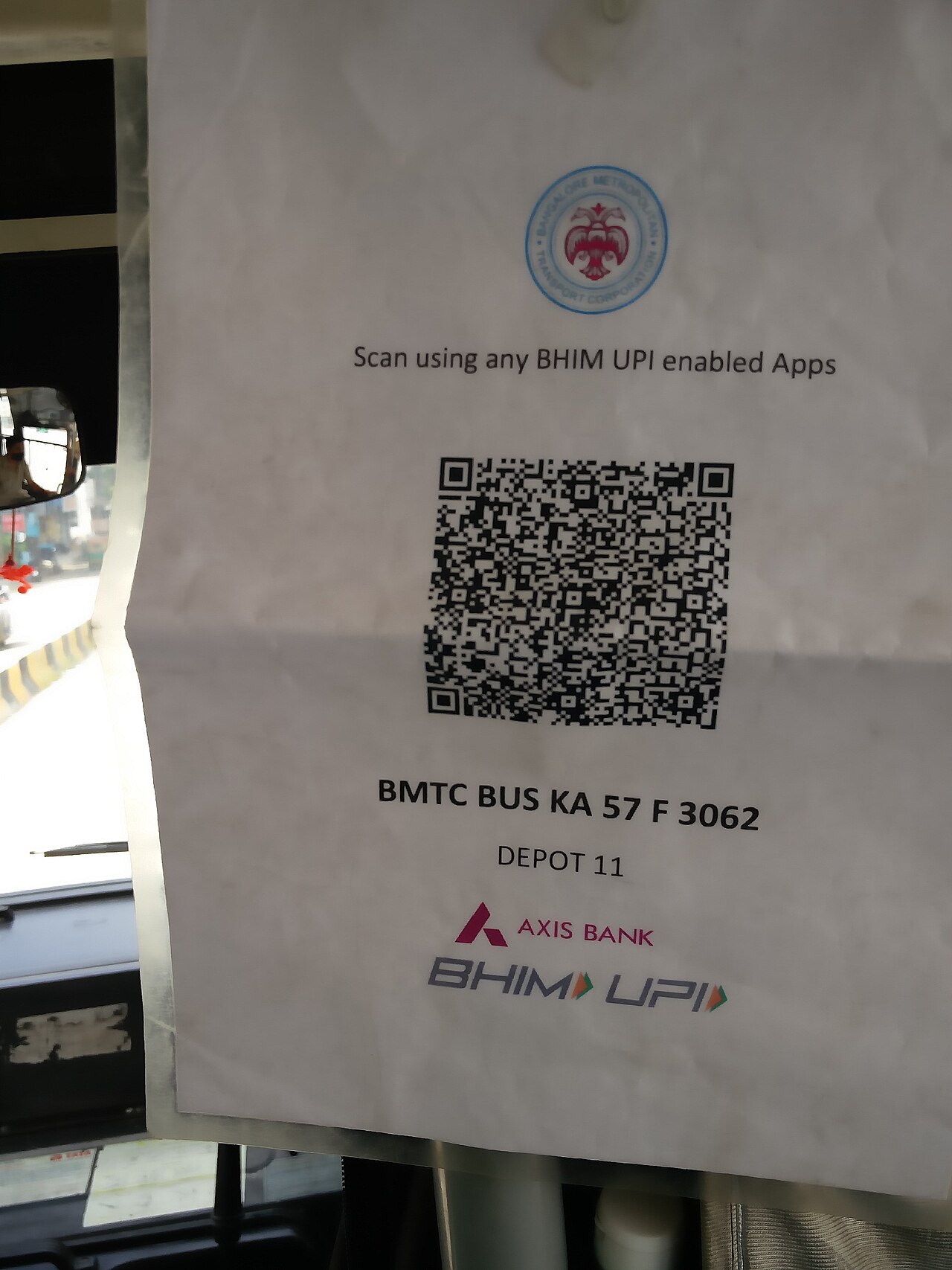
It's a drizzly evening and you're at the corner tea stall. The chai is hot, the glass is small, and the bill is ₹20. You pull out your phone, point it at a square sticker taped to the counter, type four or six digits, and before you've taken your second sip the stall's speaker announces that the money has arrived.
That whole thing takes a few seconds. But in those seconds your ₹20 makes quite a journey. Let's slow it right down and follow it.
The sticker that talks
That black-and-white square is a QR code, short for "quick-response" code. It is like a shop's address written in a secret pattern of tiny boxes. When your camera reads it, your UPI app learns where the money should go: the shop's UPI ID, also called a virtual payment address. Instead of typing a long bank account number and branch code, you just point and shoot.
UPI itself stands for Unified Payments Interface. It was built by the National Payments Corporation of India (NPCI), and the Reserve Bank of India regulates it. It started as a pilot on 11 April 2016 in Mumbai with just 21 banks.
The relay race behind your ₹20
Think of it as a relay race, where the baton is a message saying "pay ₹20 to this shop". First, your app, such as PhonePe, Google Pay or Paytm, passes the baton to its payment service provider, a bank that connects the app to UPI. That bank hands it to NPCI, which acts like the main railway junction where every route meets.
NPCI sends the request to your bank. Your bank checks that the account is real and has at least ₹20 in it. This is where your UPI PIN comes in: those four or six digits are your signature, proving it is really you. Think of it as the key to your own cash box that only you know. Never share it with anyone, not even someone who says they are from your bank.
Once your bank is satisfied, ₹20 is debited from your account. The message races on to the chaiwala's bank, which credits his account. Then a confirmation comes back with a reference number, your app shows a green tick, and his speaker speaks up. Every runner in that relay does their bit almost instantly.
How big has UPI become?
Very, very big. According to NPCI figures reported by Entrepreneur India, UPI handled a record 25.47 billion transactions in October 2026, worth ₹31.53 lakh crore. That works out to about 822 million payments every day. The average daily value crossed ₹1 lakh crore, at about ₹1,01,707 crore. Transaction numbers grew 23%, and their value 16%, compared with October last year.
To picture it: that is about 9,500 payments every second, round the clock. Three apps do most of the work. In September, the latest month with app-wise data, PhonePe had 45.6% of transactions, Google Pay 32.2% and Paytm 8.1%.
And your chai stays free to pay for. Under a framework announced for certain shop payments above ₹2,000, a 0.4% charge would apply, but payments of ₹2,000 or less, and transfers between people, are exempt. Its start, planned for 15 October, was put off until after Diwali, and a new date is yet to be announced.
Why wallets are knocking again
Before UPI took off, many Indians paid with digital wallets. A wallet is a "prepaid payment instrument": you load money in advance and spend from it, like packing a tiffin box in the morning and eating from it through the day. Paytm's wallet was hugely popular, but it ran through Paytm Payments Bank. In January 2024, the RBI stopped that bank from accepting fresh deposits and wallet top-ups after 29 February 2024, citing persistent non-compliance. Its banking licence was cancelled in April 2026.
Now there is a new chapter. On 13 November 2026, the RBI gave in-principle authorisation to Paytm Payments Services, a Paytm subsidiary, to issue and operate prepaid payment instruments, including wallets. It is not a green light just yet. The company must complete a system audit, including a cybersecurity audit, within six months, and can start issuing wallets only after it gets final authorisation.
The wallet idea has never fully gone away. UPI Lite, launched by the RBI in 2022, is itself a small on-device wallet meant for low-value payments like your chai.
So what?
UPI turned a ₹20 payment into something as easy as waving at the chaiwala. Knowing how it works helps you use it wisely: the QR tells the app where money goes, the PIN is your signature, and your bank only moves money when you approve it. If someone asks you to enter your PIN to receive money, stop. You never need your PIN to get paid.
- October 2026 UPI volume, value, daily averages, growth; app shares; MDR framework and deferral: Entrepreneur India (NPCI data)
- UPI built by NPCI, RBI regulates, 2016 pilot with 21 banks, UPI ID, PIN, UPI Lite: Wikipedia: Unified Payments Interface
- Step-by-step UPI payment flow (app, PSP, NPCI, banks, PIN, confirmation): Razorpay
- 13 Nov 2026 in-principle PPI authorisation, six-month audit, final authorisation needed, 2024 restrictions, licence cancellation: Indian Startup News
- Wallet approval conditions and history: Free Press Journal
- QR code meaning, Denso Wave, 1994, car parts: Wikipedia: QR code
Spotted a mistake or have an idea for a read? Write to [email protected].
