The Quad: four friends, no army, and a lot of homework
Some friendships begin at a wedding or in a school bus. One of Asia's best-known friendships began with a disaster. When the giant Indian Ocean tsunami struck in December 2004, four countries rushed ships and help to the region: India, the United States, Japan and Australia. That teamwork is where the group now called the Quad traces its roots.
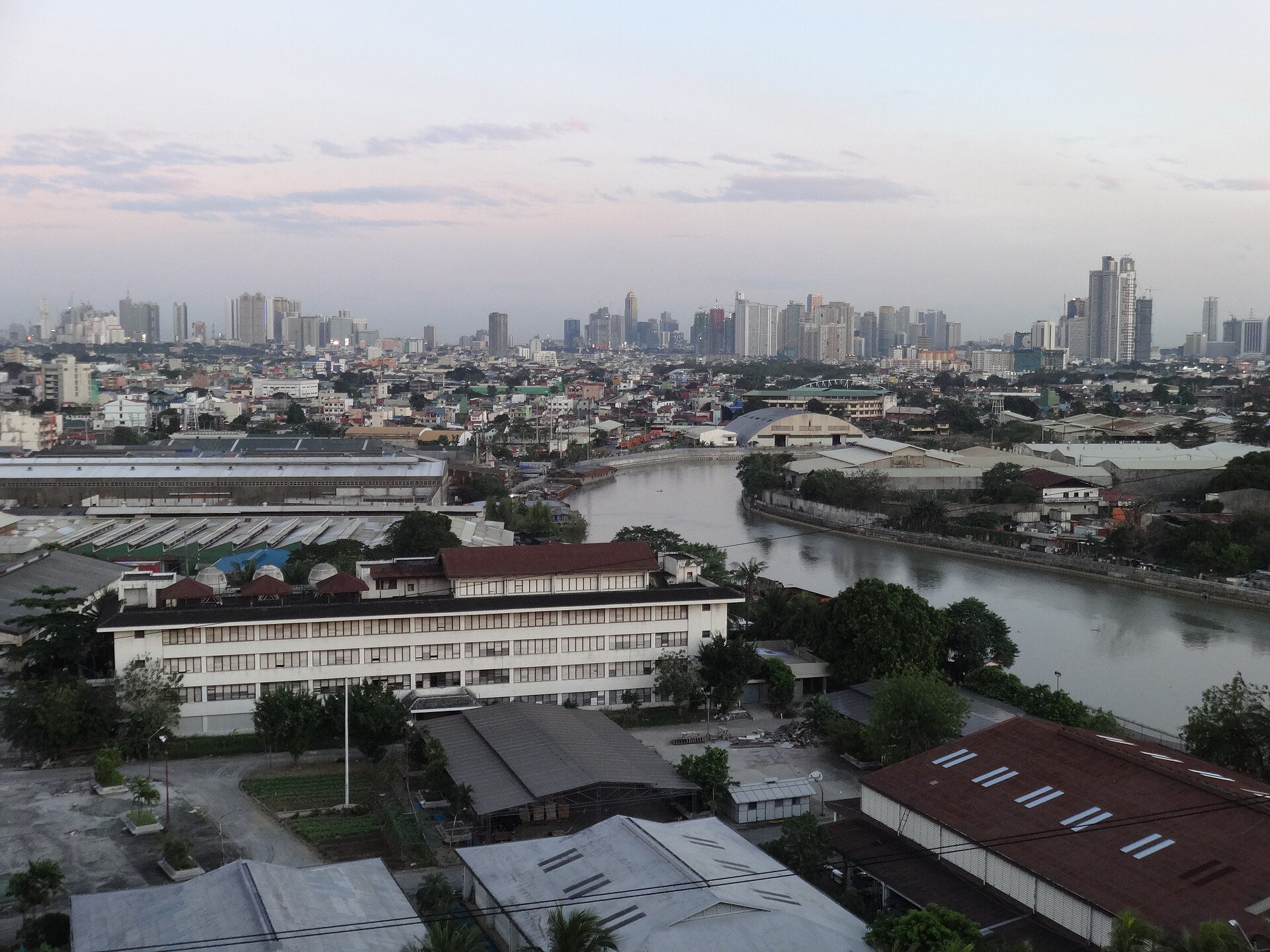
This week the Quad is back in the news, and in a city it knows well. Prime Minister Narendra Modi is travelling to Manila, the capital of the Philippines, from 16 to 18 November for two big regional meetings. There is talk of a Quad leaders' meeting there too. But, as we will see, nobody in New Delhi has said yes yet.
From tsunami relief to a club with a name
After the tsunami, the four countries formed a small, temporary 'core group' to coordinate relief. In 2007, Japan's then prime minister Shinzo Abe proposed turning the idea into a regular dialogue. The first meeting was held in Manila in May 2007.
Then it went quiet. In 2008 Australia pulled out, partly out of unease about tensions between the US and China, and the group stopped meeting. Think of a WhatsApp group that everyone mutes after the trip is over. It came back to life in November 2017, again in Manila, when the four leaders agreed on the sidelines of the ASEAN summit to bring it back. ASEAN is the club of Southeast Asian countries.
The real upgrade came in March 2021, when the four leaders held their first summit, online, in the middle of the Covid pandemic. Their first in-person summit was at the White House in September 2021. Later ones followed in Tokyo in 2022, at Hiroshima in Japan in 2023, and in Wilmington, in the US state of Delaware, in September 2024. That was the last one. India was meant to host the next, in 2025, but it did not take place.
So what does the Quad actually do?
The Quad is less like a cricket team that plays matches and more like a group of neighbours who split the work of running a housing society. One handles the water tank, one the lights, one the security guard. Each project is shared.
Vaccines: During Covid, the Quad Vaccine Partnership, set up in March 2021, coordinated the delivery of almost 800 million vaccine doses worldwide, according to Australia's government. More than 400 million of those went to countries in the Indo-Pacific, the vast ocean region stretching from India's coast to the Pacific islands.
Watching the sea: Under a scheme called the Indo-Pacific Partnership for Maritime Domain Awareness, the Quad pays for satellite data so small Pacific island nations can see what ships are moving in their waters, 'Maritime domain awareness' simply means knowing what is happening at sea. In May 2026, the foreign ministers added a new plan to share maritime surveillance information, starting with the Indian Ocean.
Internet cables and more: Most of the world's internet travels through cables lying on the seabed. The Quad has a centre to help build and look after these undersea cables, and its ministers said they were helping connect every Pacific Islands Forum country by cable by 2026. There is also a disaster-relief partnership, a health-training programme, and, since 2026, a framework on critical minerals, the special metals that go into phone batteries and electric cars.
What the Quad is NOT
Here is the part many people get wrong. The Quad is not a military alliance like NATO. There is no promise that if one member is attacked, the others must fight alongside it. The four navies have held exercises together, but the Quad has no shared defence treaty and no joint army.
Australia's foreign ministry calls it a 'diplomatic partnership' working for a peaceful, stable and prosperous Indo-Pacific.
Why it is in the news this week
Mr Modi is attending the 23rd ASEAN-India Summit and the East Asia Summit in Manila on 17 November. Last month, US Secretary of State Marco Rubio said the next Quad summit was expected on the sidelines of the ASEAN meetings in the Philippines.
On 14 November, the news agency Reuters, quoting two unnamed sources, reported that the four leaders were expected to meet on Tuesday, 17 November, the last day of the summit. They said critical minerals and the safety of commercial shipping were likely to be discussed. If it happens, it would be the first Quad leaders' summit in two years.
India, however, had not confirmed it as of the latest reports we could find. Asked about it at a briefing announcing the trip, a senior External Affairs Ministry official, Secretary (East) Rudrendra Tandon, said: "We don't have any information on this at the moment." So treat the Quad meeting as possible, not certain, until it is announced.
So what?
For most of us, the Quad will never feel as close as the price of tomatoes. But the things it works on are things we use: vaccines, safe shipping lanes that carry our fuel and goods, undersea cables that carry our UPI payments and video calls, and the minerals inside our phones. Whether four leaders sit at one table in Manila tells us how seriously these big countries are taking that shared homework.
- Tsunami core group, Abe's 2007 proposal, first meeting Manila May 2007, Australia's 2008 exit, 2017 revival, summit list, 'not an alliance' (no collective defence): Wikipedia: Quadrilateral Security Dialogue
- Roots in 2004 tsunami response; 'diplomatic partnership'; IPMDA, cable centre, HADR, health, critical minerals initiatives: Australian Government, DFAT
- Vaccine Partnership formed March 2021; almost 800 million doses, 400 million+ to Indo-Pacific: Australian Government, Indo-Pacific Health Security
- May 2026 foreign ministers: maritime surveillance collaboration, cables to all PIF countries by 2026, critical minerals framework: Australian Foreign Minister (factsheet)
- Modi in Manila 16-18 Nov; summits on 17 Nov; Rubio remark; India not confirmed; Tandon quote; 2025 summit not held: The Business Standard (Bangladesh)
- Reuters: leaders expected to meet Tuesday; first in two years; last in Sept 2024 Delaware; minerals and shipping agenda: GMA News (Reuters)
Spotted a mistake or have an idea for a read? Write to [email protected].
